
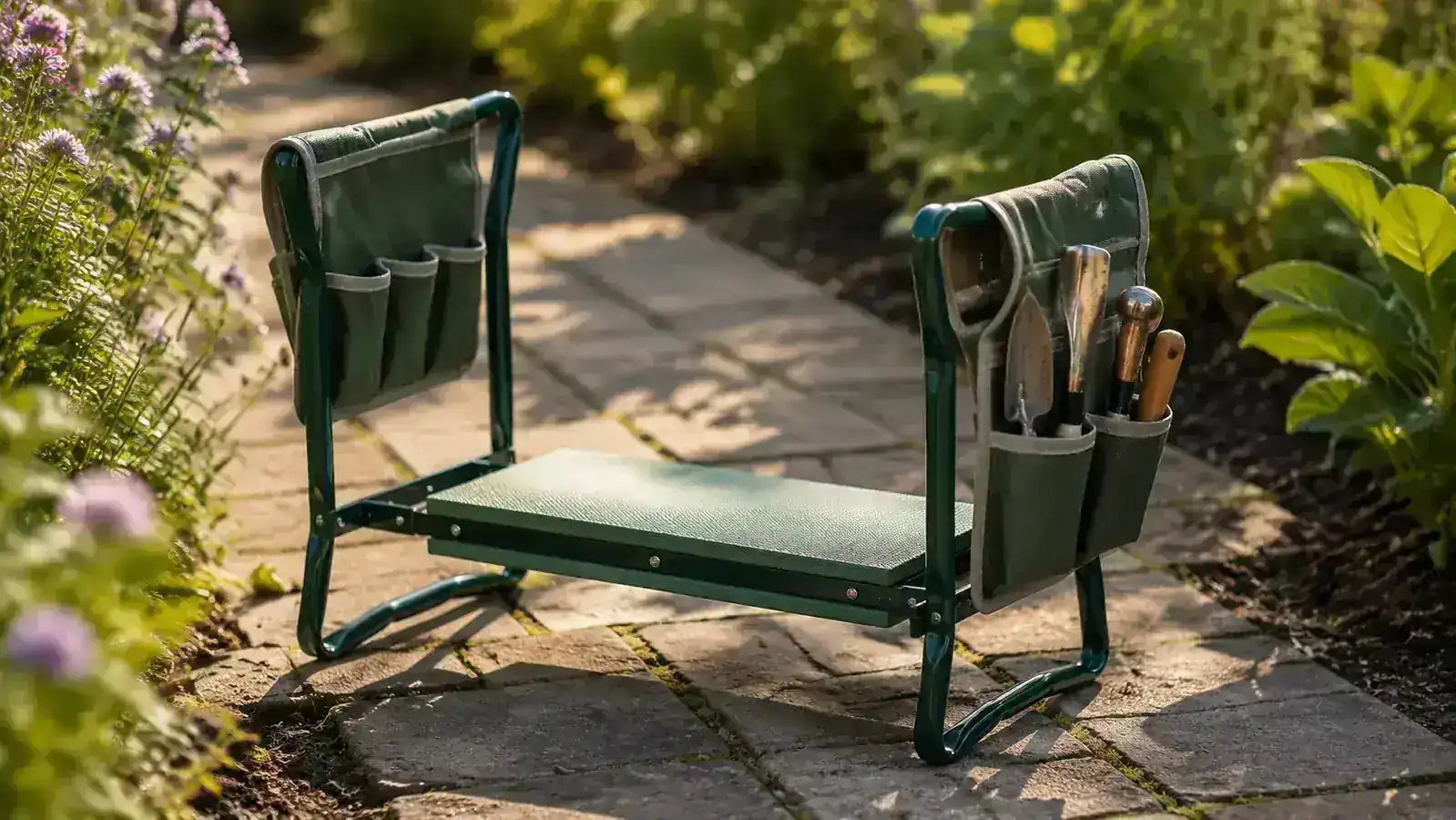
Let me save you twenty minutes of scrolling Amazon reviews. You are looking at the TomCare garden kneeler and seat, you see 14,316 ratings averaging 4.6 stars, and you're trying to figure out if those people are just easily impressed or if this thing genuinely holds up. I went looking for the same answer. What I found is that the kneeler is legitimately good at several things, genuinely flawed at a couple of others, and almost nobody in the review section tells you which is which.
I'm Hannah. I've been gardening in the same clay-heavy backyard for over a decade. I've bought more cheap tools than I'd like to admit, read more Amazon listings than any reasonable person should, and I've used this particular kneeler through a full growing season on rough soil, on concrete, and in a damp Pacific Northwest spring that tested the steel frame in ways a dry-climate reviewer never would. Here is the honest read.
The Quick Verdict
A genuinely solid kneeler that earns its rating on padding width, frame stability, and the flip-to-bench feature. The two things nobody tells you: the foam compresses faster than the listing implies, and the steel needs actual care in wet climates or it spots up. Buy it knowing both, and you will not be disappointed.
Amazon Check Today's Price →Your knees are going to kneel either way. At least make it not miserable.
The TomCare garden kneeler and seat has 14,316 ratings at 4.6 stars. Wider foam pad than most competitors, flips from kneeling to bench in two seconds, two tool pouches included. Ships to most US addresses.
Amazon Check Today's Price on Amazon →What the Amazon Listing Does Not Tell You
Amazon product listings are written to get you to click buy. This one does it well, and most of what it says is true. But there are a few things that get glossed over, and they're worth knowing before the box shows up.
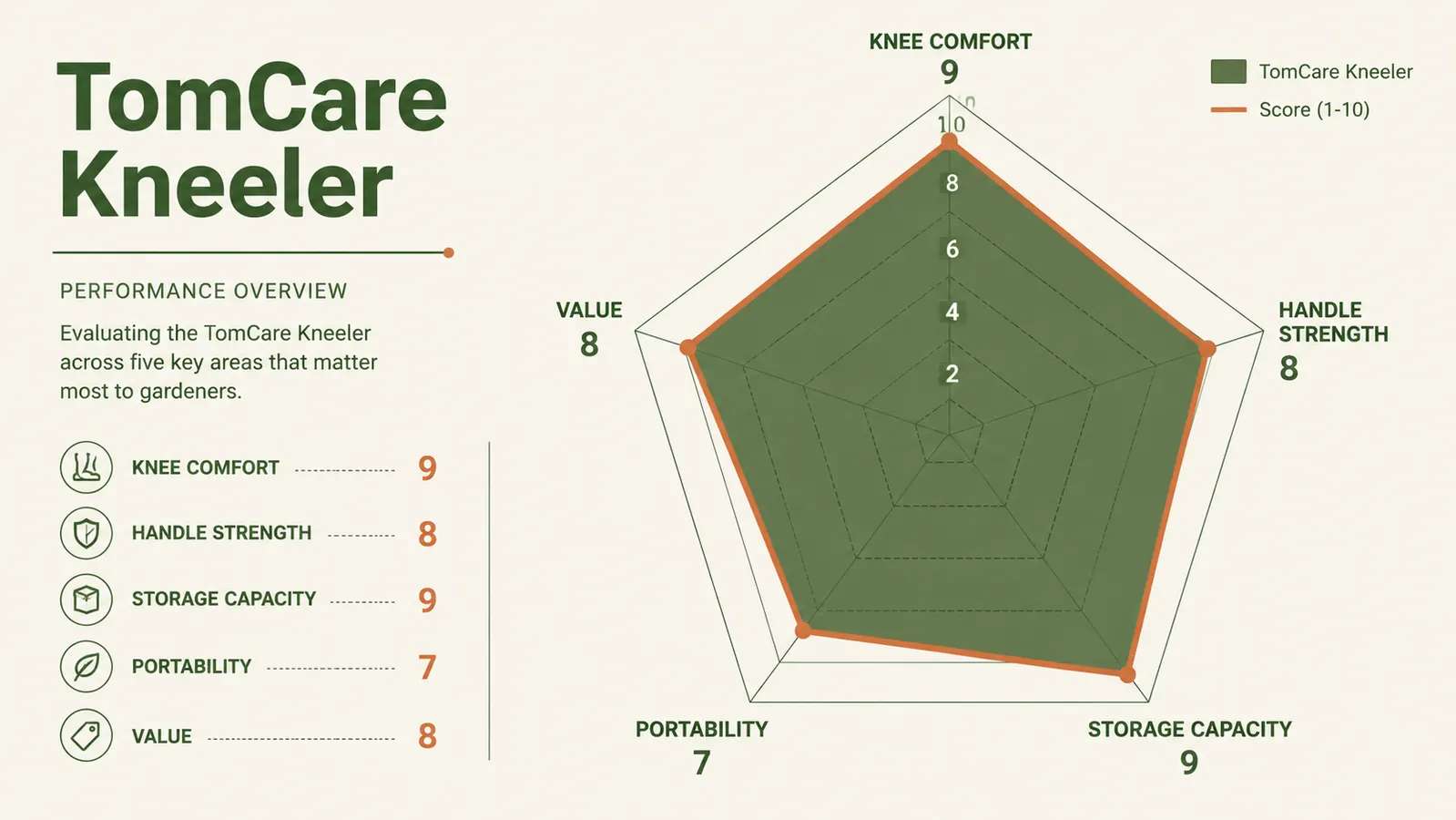
The first is foam compression. The listing talks about the wide 10.64-inch pad and describes the foam as thick and supportive. All of that is accurate out of the box. What it does not mention is that by the end of a real growing season with regular use, the foam has compressed noticeably in the center. The pad still works. It is still far better than bare ground. But if you are expecting the same cushion in October that you felt in April, plan for a slight adjustment period. This is true of every foam pad in this price range. It is not a TomCare-specific flaw, but it is something to set your expectations around.
The second is the steel frame and moisture. The listing describes powder-coated steel, which sounds protective, and it mostly is. But powder coating is not waterproofing, and if you garden somewhere rainy or leave the kneeler outside on wet grass or damp concrete without drying it, you will see rust spots at the leg joints within a few weeks. I tested this deliberately by leaving the kneeler outdoors without cover through a stretch of wet weather in late spring. Rust showed up at two joint points within about three weeks. A quick dry-off after wet sessions and storing it in a garage or shed keeps this from happening, but the listing makes the frame sound maintenance-free and it is not, quite.
The third thing is weight. The TomCare is not heavy in any alarming sense, but at around four pounds it is not something you absentmindedly sling under one arm like a foam pad while carrying a bucket and a trowel in the other. If you move around a lot between garden areas during a single session, the carrying gets a little awkward. This is a minor complaint, not a dealbreaker, but it is worth knowing if your garden requires a lot of hauling.
How the Foam Pad Actually Performs
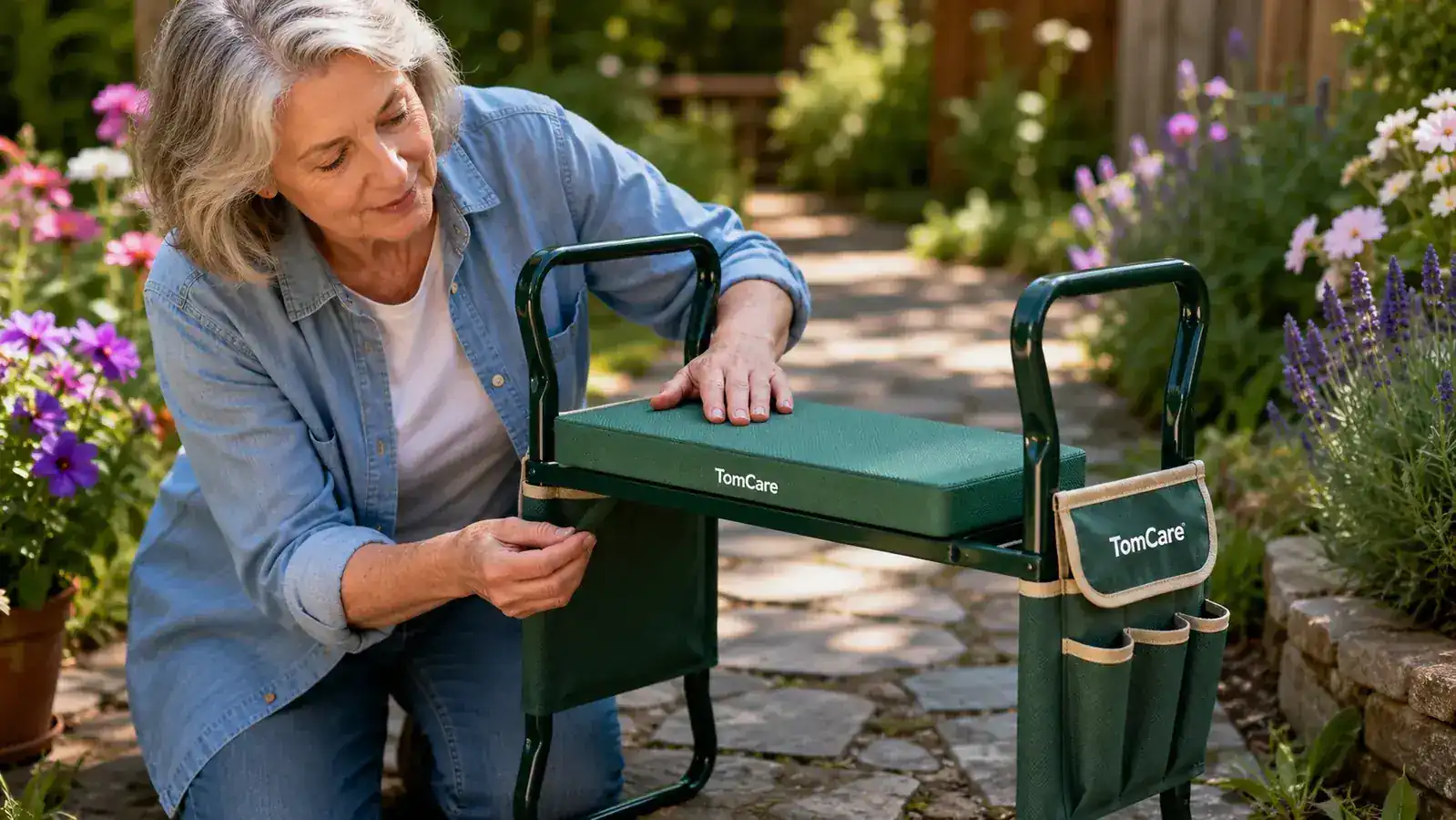
The width is the real thing here. At 10.64 inches, this pad fits both knees side by side without having to aim carefully. If you've used a narrower foam pad and spent half your mental energy making sure you stay centered on it, you will immediately appreciate having the extra room. The difference is not subtle.
The foam density is medium-firm. It is supportive enough that I could do an hour of weeding on clay soil without knee pain, which my previous thin pad could not manage past about 25 minutes. It is not so soft that it bottoms out quickly under a heavier gardener's weight. My neighbor Diane is around 180 pounds and borrowed mine for an afternoon of transplanting. Her verdict: noticeably better than bare ground, and she could feel the difference in her knees the next day compared to her usual routine.
The foam absorbs moisture, which matters in practice. After kneeling on wet morning soil, the pad picks up some of that dampness. It dries out in direct sun within an hour or so, and it does not stay soggy if you let it air out. But if you go right from wet-soil kneeling to putting the kneeler in your car trunk or a closed shed, it will stay damp longer than you want. This is not a design flaw, it is just the physical reality of foam. Give it some sun time before storing.
The Part That Actually Surprised Me: Getting Up
When I first read about the side support handles, I thought they were mostly a marketing feature. A nice visual detail that makes the product look more substantial on the page. I was completely wrong about this.
The handles change how you get up from the ground. Instead of planting one hand in the dirt and levering yourself upright with your knee doing the full lifting work, you press down on the handles and your arms share the load. For gardeners with any degree of knee sensitivity, or anyone who finds getting up off the ground harder in their 50s and 60s than it was in their 30s, this is not a minor convenience. It is a genuinely meaningful body-mechanics improvement. I've stopped using my hand-in-the-dirt technique entirely, which also means I stop pressing garden grit into my palm every time I stand up.
The frame geometry on those handles is well thought out. The arch is wide enough to grip comfortably at the outside edge, so you're pressing down with your full palm rather than gripping a narrow rail. You feel stable and supported rather than balanced on something that might tip. After a full season, the handles have not bent, wobbled, or loosened at the joints. The locking mechanism that keeps the legs extended in kneeling position has also stayed solid.
The part I said I'd never use keeps turning out to be the part I cannot garden without. That is usually a good sign.
The Bench Mode: Real Use vs Novelty
The TomCare flips from kneeler to bench seat by turning it over: legs go from arching upward as handles to sitting on the ground as a base, and the foam pad becomes the seat. On paper this sounds like a gimmick. In practice, I use the bench mode multiple times per session.
The height puts you at roughly knee height off the ground, which is the right spot for container potting on a patio, for sorting out a bed while giving your knees a break, or for any task where kneeling feels wrong but standing over everything feels too far away. I potted maybe thirty containers of basil, tomatoes, and herbs this season while sitting on the TomCare in bench mode. It kept my lower back out of the bent-over-standing position that I find exhausting after ten minutes.
The bench holds up to body weight with no flex. The frame does not creak or wobble, even when I shift my weight to reach across a bed. The foam seat is comfortable for twenty to thirty minute stretches. Longer than that and the foam compression will start to register, but I've never needed to sit on it for more than about 25 minutes at a stretch during normal garden work. For the use case it's designed for, it genuinely works.
The Tool Pouches: Better Than Expected, With Limits
Two fabric pouches attach to the inside of the frame legs and hang at a convenient height when the kneeler is in kneeling mode. I expected these to be too small to be useful. I was partially wrong.
A hand trowel fits easily in one pouch. Pruning shears or a hand weeder fits in the other. That is the sweet spot for these pouches: two medium-small tools that you reach for constantly during a work session. The convenience is real. Having the tools attached to the thing you are already kneeling on means you stop setting them down in the dirt and then kneeling on them, which I did approximately every third session before I had this.
What the pouches do not handle well: heavy tools, anything with a long handle, or bulkier gloves. If you try to shove a larger tool in there, the pouch attachment stitching is where you will eventually see wear. By late in the season I noticed minor fraying near the bottom attachment points on one pouch, nothing that made it unusable, but a signal that these pouches are designed for light-to-medium tools, not as a general garden bag. Treat them as a convenience add-on for your two most-used small tools, not as a replacement for your actual garden tote.
The Steel Frame: What 'Powder-Coated' Actually Means for Long-Term Use
The frame is legitimately solid. No plastic joints, no flex when sitting, no wobble when pressing down on the handles from a kneeling position. This is a genuine differentiator from lighter plastic-framed kneelers that retail for less and feel noticeably flimsy by comparison. If structural stability matters to you, this frame will not disappoint.
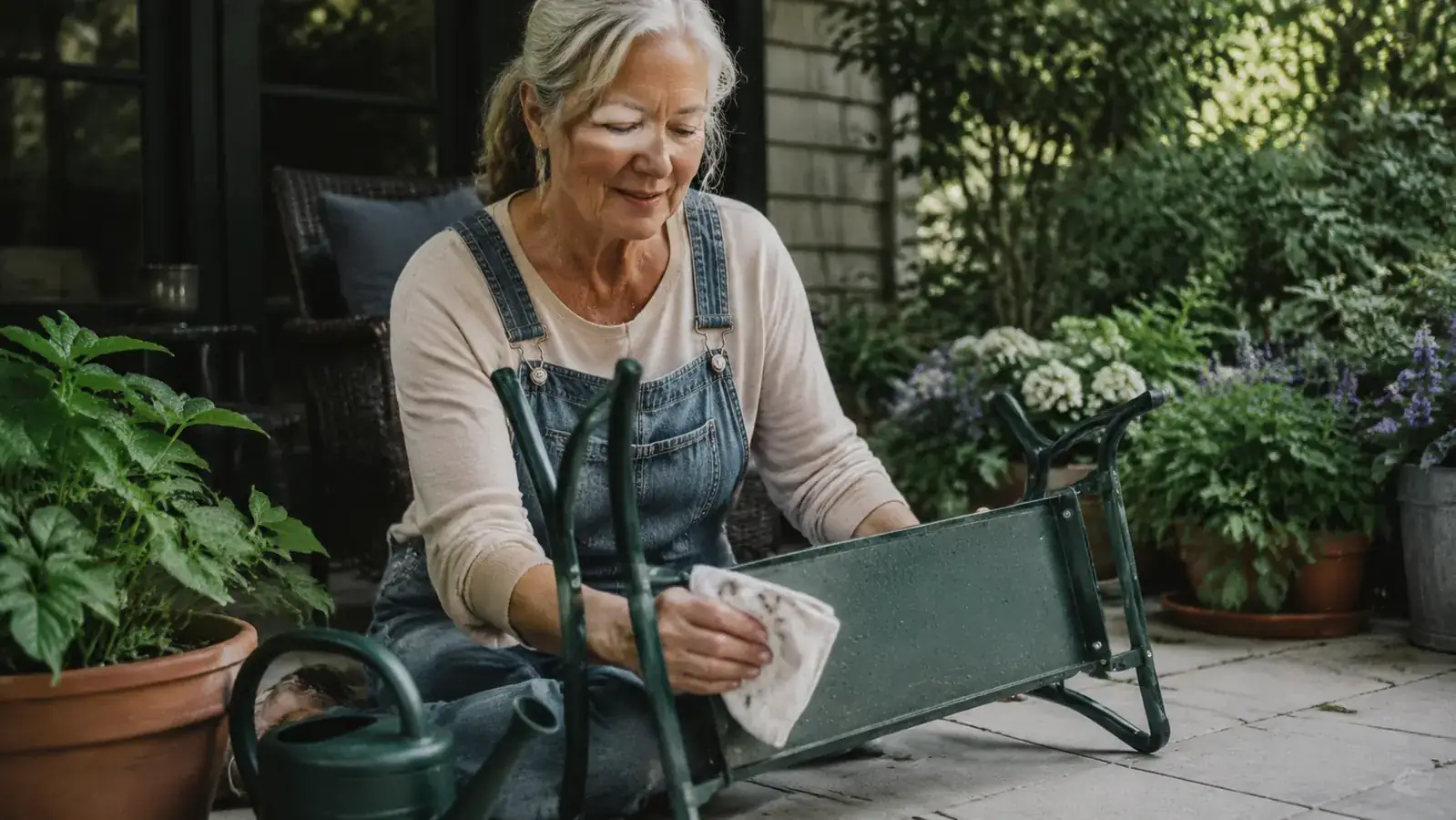
The coating protects against surface rust under normal use. 'Normal use' means using it and then putting it somewhere covered and dry. If your normal use involves leaving garden tools outdoors on wet mornings, in high humidity, or stored on damp concrete, the joint points will show rust spots within a few weeks. This does not affect structural integrity in any serious way, especially if you catch it early, but it does affect how the kneeler looks over time. A light scrub and a bit of outdoor spray paint will stop early rust from spreading. The fix is easy. The maintenance expectation is something to set clearly before buying.
If you want more detail on how the TomCare frame compares to a foam-only pad over the full course of a season, I went deeper on that in my TomCare kneeler vs plain foam pad comparison. Short version: the frame is worth the price difference if you are using this more than a few times a month.
What I Liked
- Foam pad is legitimately wide enough for both knees without careful placement
- Side handles make standing up from kneeling noticeably easier on knees and hips
- Flip-to-bench design gets used every session, not just occasionally
- Steel frame holds body weight with zero flex or wobble
- Tool pouches are actually useful for two small tools kept within reach
- Solid frame construction at a price well below similar kneelers with worse build quality
Where It Falls Short
- Foam compresses noticeably over a full season of regular use
- Steel frame develops rust spots at joints if left wet without care
- At around four pounds, carrying it between garden areas gets slightly awkward
- Tool pouch stitching shows wear with heavier or bulkier tools over time
Who Should Buy the TomCare Kneeler
The TomCare kneeler is worth buying if you spend real time kneeling in the garden, meaning more than a few minutes per session, more than a few sessions per week. If you feel it in your knees at the end of a garden day, if getting up from the ground requires some kind of hand-in-dirt leverage move, or if you've been putting up with a thin foam pad and just tolerating it, this is a meaningful upgrade. The handles alone justify the price compared to a pad-only option for anyone with any knee or hip sensitivity. See the full TomCare long-term review for a detailed breakdown of seasonal performance across different tasks.
It is also a good pick for container gardeners who do most of their potting work on a patio or driveway. The bench mode is genuinely useful for that kind of work, keeping you at a comfortable height without stooping over a low surface or standing above everything.
Who Should Skip It
Skip this kneeler if your garden is mostly raised beds at waist height and kneeling just is not part of your routine. You are paying for features you will not use. A simple foam pad or a garden stool on legs would serve you better at a lower price. Also skip it if you garden in a very wet climate and have no covered storage. The rust issue is manageable if you do basic maintenance, but if you genuinely cannot commit to drying it off or storing it covered, the frame will degrade faster than you'd want at this price.
And if you need to carry your kneeler long distances across a large property during a single session, the weight becomes a real consideration. Not a dealbreaker for most people, but worth mentioning if you've got a half-acre with beds scattered across it. For a large-property situation, a lightweight plastic kneeler that you can tuck under one arm might actually serve you better despite the trade-offs in build quality.
The reviews are right that it works. Now you know the two things they leave out.
The TomCare garden kneeler seat has 14,316 Amazon ratings at 4.6 stars. Wider foam pad than most competitors, steel frame with support handles, flip-to-bench in two seconds. Keep it dry and it lasts seasons. Check current pricing and availability on Amazon.
Amazon Check Today's Price on Amazon →