
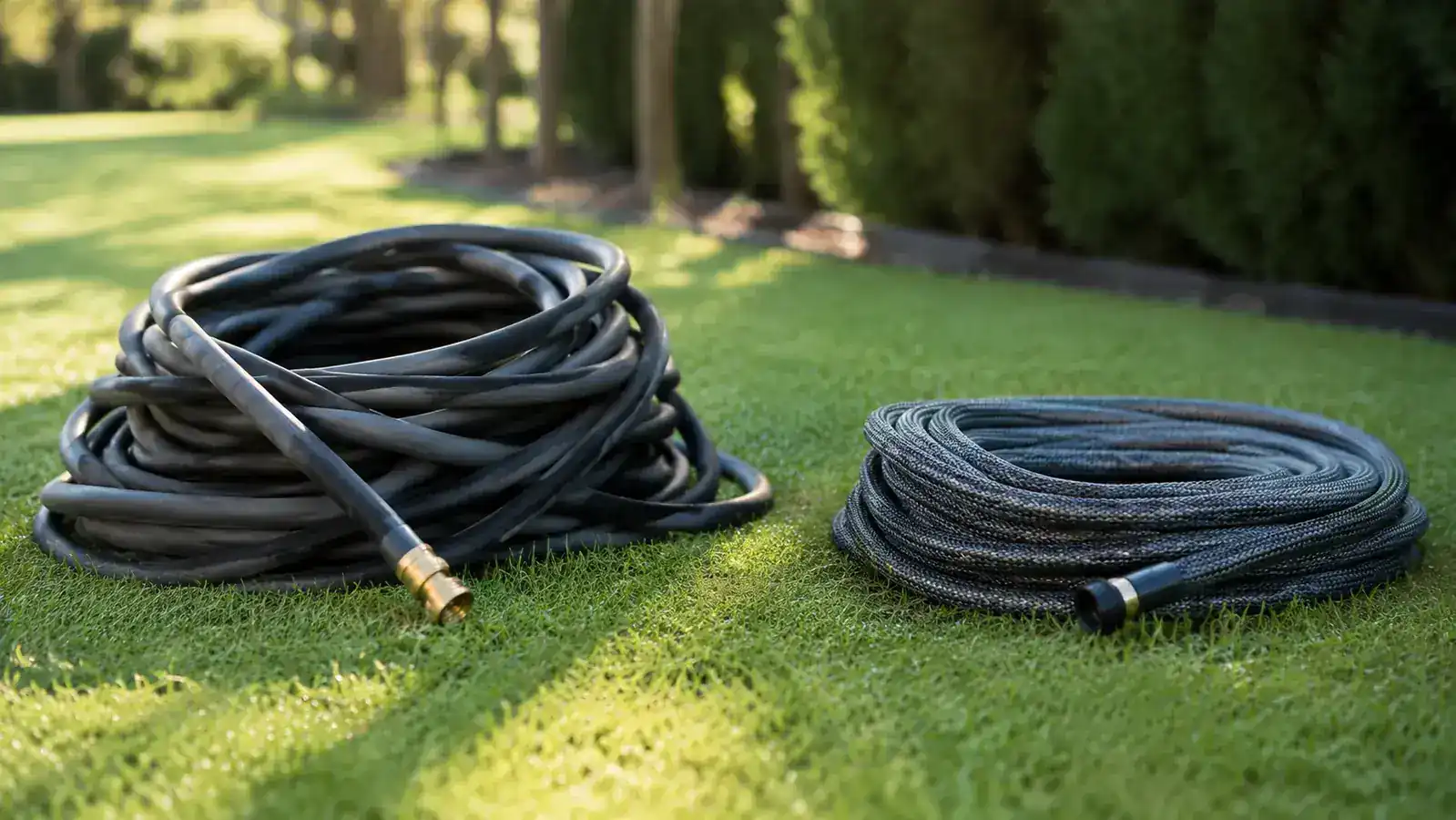
If you have ever wrestled a 50-foot rubber hose around a raised bed corner on a 90-degree afternoon, you already know the answer is somewhere between "frustrating" and "why am I even doing this." I spent most of two gardening seasons with a standard rubber hose and then switched to the Flexi Hose 50FT expandable. The short version: they are not the same tool and they are not trying to be. The longer version is below, because which one is actually better for you depends on a few specifics.
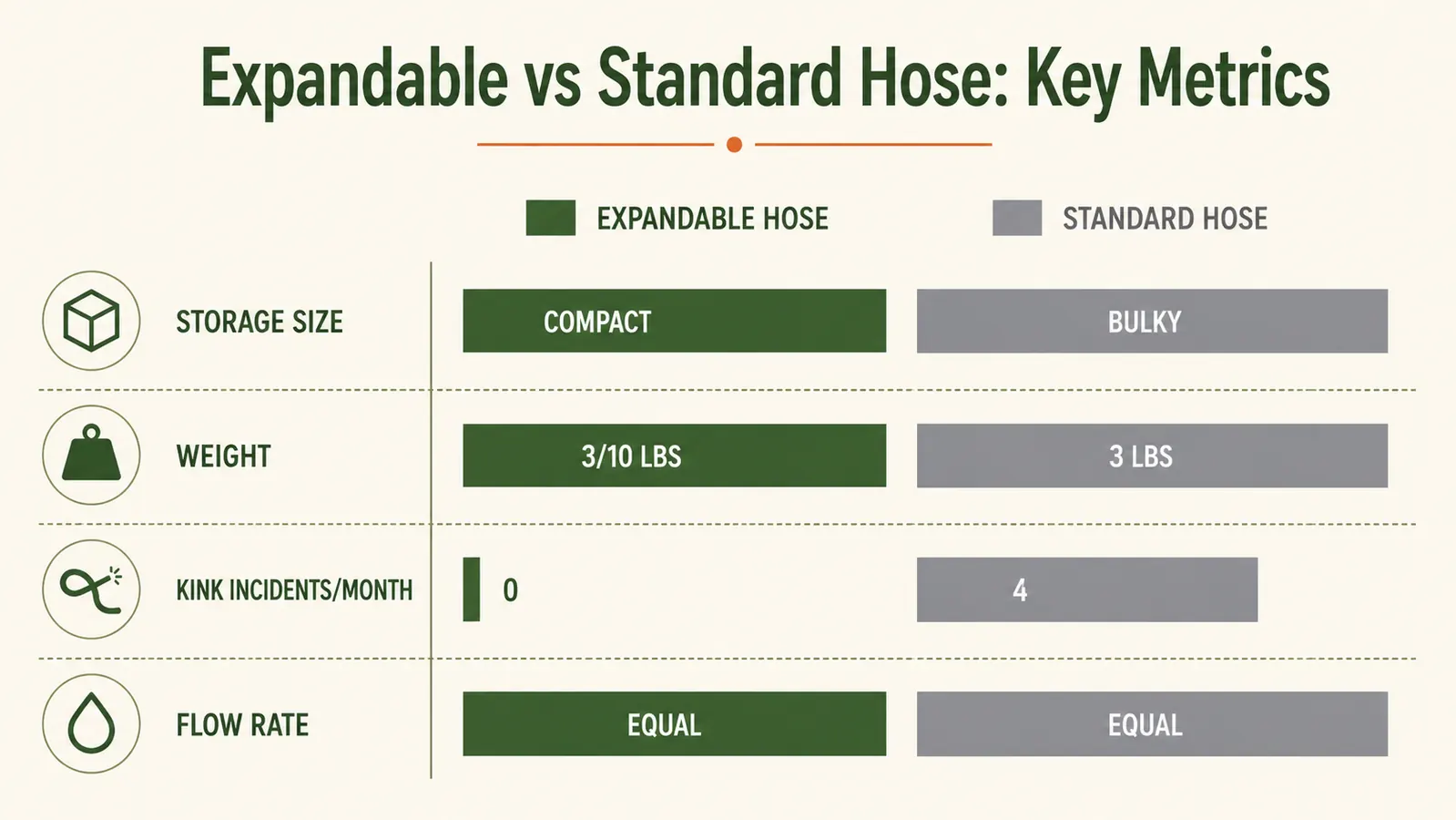
This is not a case where one hose crushes the other. A standard rubber hose is more pressure-tolerant and can handle some uses an expandable cannot. But for the typical home gardener watering beds, containers, and a modest lawn a few times a week, the Flexi Hose wins on almost every dimension that matters in daily use. Let me show you the numbers and the reasoning so you can decide.
| Flexi Hose | Regular Garden Hose | |
|---|---|---|
| Weight (full 50 ft) | Approx. 2.2 lbs expanded, under 1 lb stored | 5 to 8 lbs depending on wall thickness |
| Stored / Coiled Length | Collapses to about 17 ft, stores in one hand | Full 50 ft stays bulky, needs a reel or hook |
| Kink Resistance | Latex inner tube expands uniformly, kinks rarely | Kinks at bends and corners, especially cold mornings |
| Burst / Working Pressure | Rated up to 8 bar / 116 PSI | Typically 10 to 12 bar depending on the hose brand |
| Fitting Material | Solid brass connectors on both ends | Varies: brass on quality hoses, plastic on budget picks |
| Nozzle Included | Yes, 8-pattern spray nozzle included | Usually sold without nozzle |
| UV / Heat Tolerance | Outer fabric sleeve handles sun, latex dislikes heat if left pressurized | Rubber tolerates sun and heat well over many seasons |
| Durability Lifespan | 2 to 4 seasons with proper draining and storage | 5 to 10 seasons if not kinked and stored properly |
| Amazon Reviews / Rating | 4.1 stars, over 26,000 reviews | Varies widely by brand; no single comparable benchmark |
Where the Flexi Hose Wins
Weight is the big one. My old rubber hose weighs around six and a half pounds when it is dry and considerably more after a good soak. Dragging it from the side of the house to the back beds meant either unhooking it completely or fighting the drag. The Flexi Hose weighs barely two pounds when fully expanded and under one pound when it has drained and collapsed back to storage size. That difference is not trivial when you have sore wrists or are just trying to do a quick ten-minute watering before work.
Kink resistance is the second reason I switched and never looked back. The expandable design means the hose is always under some tension from the internal latex tube -- it wants to be straight. Corners still slow the water but they rarely create the hard kink that cuts flow to a trickle. With my old rubber hose, I was turning around every three minutes to stomp out another bend. With the Flexi Hose I mostly just water. The 8-pattern nozzle it comes with is also better than any budget nozzle I bought separately for my rubber hose.

Storage is the third win. My rubber hose lived on a wall-mounted reel that still stuck out about eight inches from the house and took a full minute to crank back. The Flexi Hose drains, collapses, and hangs on a single hook in a loop the size of a large handbag. If your outdoor space is tight, or you are pulling the hose from a shed or garage every time, this matters a lot more than any spec sheet suggests.
Where the Standard Rubber Hose Wins
I want to be fair here because a good rubber hose is genuinely tough in ways the expandable is not. Working pressure is the main one. If you are using a pressure washer attachment, filling a large stock tank, or connecting to high-pressure commercial spigots, a quality rubber hose rated at 10 to 12 bar gives you more headroom. The Flexi Hose is rated to 8 bar, which is plenty for watering and most nozzle attachments, but it is a real limit if your setup runs higher.
Long-term durability also goes to rubber. A well-maintained rubber hose can last a decade. The Flexi Hose latex inner tube is the weak point: if it is left pressurized in the sun for extended periods, or if it is stored while still wet and cold, the latex can degrade faster than you would like. I have gotten two full seasons out of mine without any issues, but the honest answer is that the Flexi Hose will probably need replacing sooner than a top-tier rubber hose would. If you want one hose to last ten years and never think about it, rubber still wins on that single dimension.

My rubber hose weighed six and a half pounds dry. The Flexi Hose weighs under one pound when it is drained. That is not a small thing when you are watering every other day all summer.
Tired of wrestling a heavy hose around your beds every time you water?
The Flexi Hose 50FT expandable has solid brass fittings, an 8-pattern nozzle, and collapses to handbag size for storage. Over 26,000 Amazon reviews back it up.
Amazon Check Today's Price on Amazon →Real-World Performance: What the Numbers Do Not Tell You
One thing that does not show up in any spec table: how each hose behaves in the cold. A rubber hose on a cool April morning is stiff and reluctant. It wants to stay coiled, and if you have ever tried to pull a cold rubber hose across a wet lawn, you have probably gone back inside for coffee and tried again later. The expandable is not immune to cold but it is significantly more cooperative. The fabric sleeve stays pliable down to about 40 degrees Fahrenheit before it starts to resist much.
Water pressure experience at the nozzle is roughly equivalent between a quality rubber hose and the Flexi Hose at normal residential spigot pressure (which typically runs 40 to 60 PSI in most US neighborhoods). Both deliver plenty of flow for general garden watering. Where some buyers notice a difference is if the spigot pressure is on the lower end: an expandable hose can have slightly reduced flow at lower pressure compared to a rubber hose of the same diameter, because the latex inner tube needs a minimum pressure to expand fully. At 40 PSI and above, this is rarely noticeable in practice.
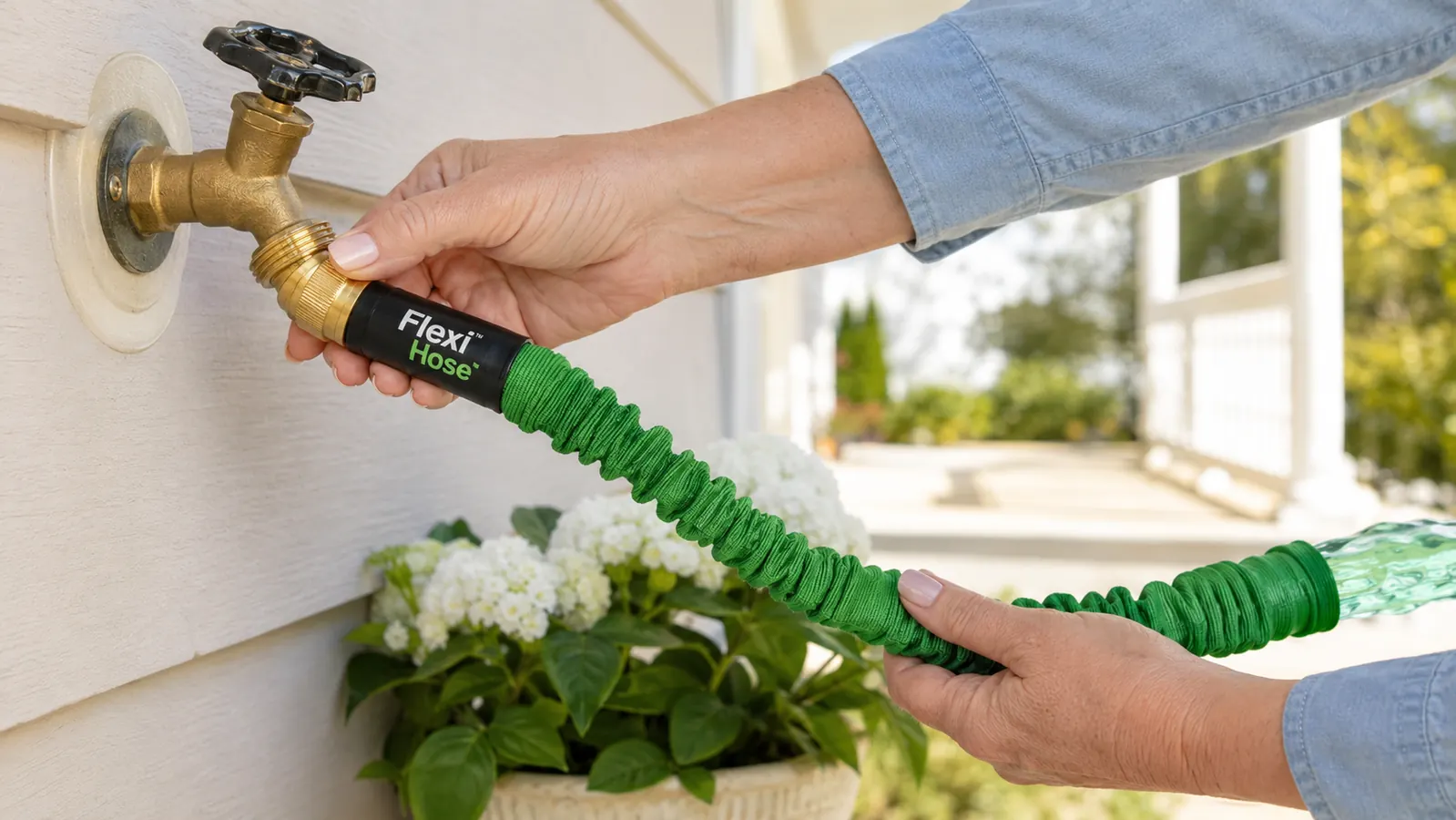
The fittings on the Flexi Hose are solid brass, which I appreciate. Budget rubber hoses often come with plastic fittings that crack or strip after a season or two. If you are comparing the Flexi Hose against a cheap rubber hose with plastic connectors, the Flexi Hose wins on fitting quality as well. If you are comparing it against a premium rubber hose with heavy-duty brass fittings, they are roughly equivalent in that category.
One Thing to Watch With the Flexi Hose
The most common negative review across those 26,000 ratings comes down to one user error: leaving the hose pressurized in direct sun for long stretches. The latex inner tube heats up under pressure and the combination shortens its life noticeably. The fix is simple: after each watering session, shut off the spigot, run the water out through the nozzle until the pressure drops, and let it drain and collapse before storing. That single habit extends the life of an expandable hose significantly. I hang mine in a shaded spot on the side of the house and have had zero leaks after two full seasons.
The other thing worth mentioning is connection security. Some users have reported the hose popping off the spigot under high pressure. Tighten the connector firmly by hand -- tight enough that it does not move, not so tight you need pliers to remove it later. The brass fittings grip well when seated correctly. If you are on the higher end of municipal pressure, a simple rubber washer replacement (they come with the hose) keeps everything sealed.
Who Should Buy the Flexi Hose
If you water beds, containers, potted plants, or a modest lawn on a routine basis, and you are tired of fighting a heavy hose around corners, the Flexi Hose 50FT is the right call. It is especially good if you have limited storage (apartment patio, small garage, tiny shed), if you have wrist or shoulder issues that make heavy hoses miserable, or if you move the hose frequently between front and back yards. The included nozzle is a genuine bonus -- it handles everything from gentle seedling misting to a strong jet for washing off garden furniture. You can read a deeper look at long-term seasonal performance in the Flexi Hose two-season review.
Who Should Stick With a Standard Hose
If you regularly run a pressure washer attachment off your garden hose, fill large water tanks, or have a high-pressure commercial spigot, a quality rubber hose rated at 10+ bar is the safer choice. Similarly, if you want a "set it and forget it" hose that you leave connected for a decade without much thought, a top-tier rubber hose (not a bargain-bin plastic one) will outlast an expandable. And if you are hard on equipment, the honest reality is that an expandable requires a bit more mindfulness at shutdown: drain it, collapse it, store it out of direct sun. If that is not how you garden, rubber is more forgiving. For those wanting a full comparison of how the Flexi Hose holds up across multiple seasons before committing, the Flexi Hose honest review covers the wear patterns in detail.
The Flexi Hose wins for daily home garden watering -- lighter, kink-resistant, and includes the nozzle.
Solid brass fittings, 8-pattern spray nozzle, collapses to handbag size. Check current pricing and availability on Amazon before they sell out of this size.
Amazon Check Today's Price on Amazon →