
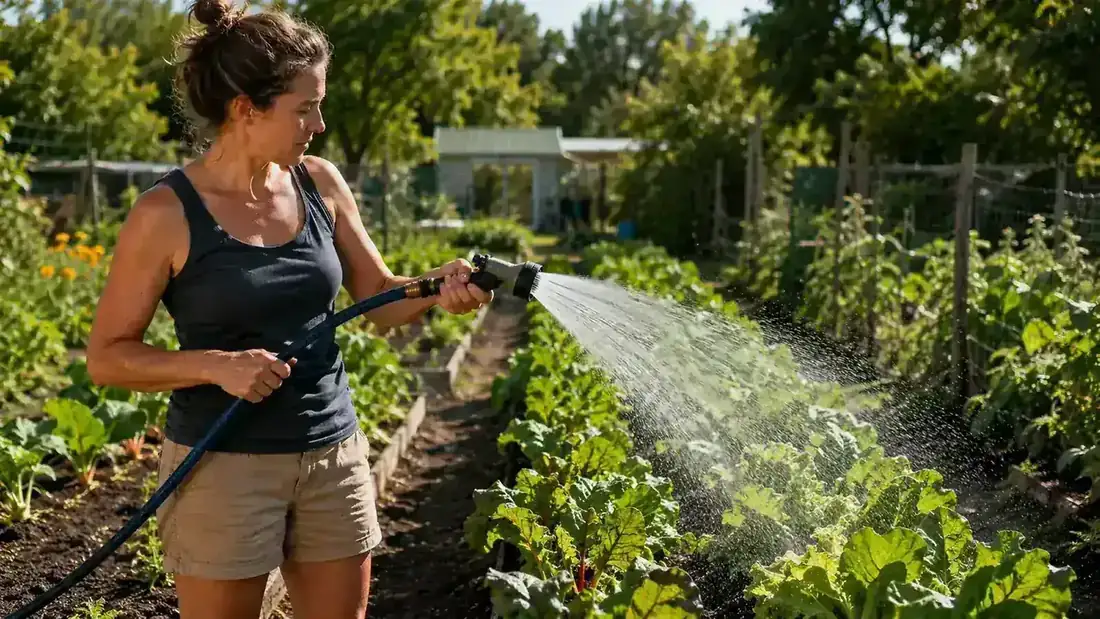
If you've spent any real time gardening, you've done the kink shuffle. You drag the hose out, get halfway to the tomatoes, and suddenly nothing comes out. You walk back to find a bend at the spigot. You straighten it, walk back, water for thirty seconds, and it kinks again near the path. By the time you've watered everything, you've walked your yard four times and your patience is gone. I did this for years with a standard rubber hose, and I just assumed it was part of gardening. It's not.
The problem usually comes down to three things: the wrong type of hose for the task, no consistent watering routine, and nozzle settings that send water where you can't use it. Fix all three and watering your garden goes from an annoying chore to a genuinely quick one. This guide walks through exactly how to do that, step by step.
Tired of fighting your hose every time you water? The Flexi Hose 50FT expandable hose is what I switched to after two seasons of kink misery.
It starts at about 17 feet, expands to a full 50 when the water's on, and contracts back down for storage. Over 26,000 Amazon buyers agree it's a real upgrade from standard rubber hose.
Amazon Check Today's Price on Amazon →Step 1: Choose the Right Hose for How You Actually Garden
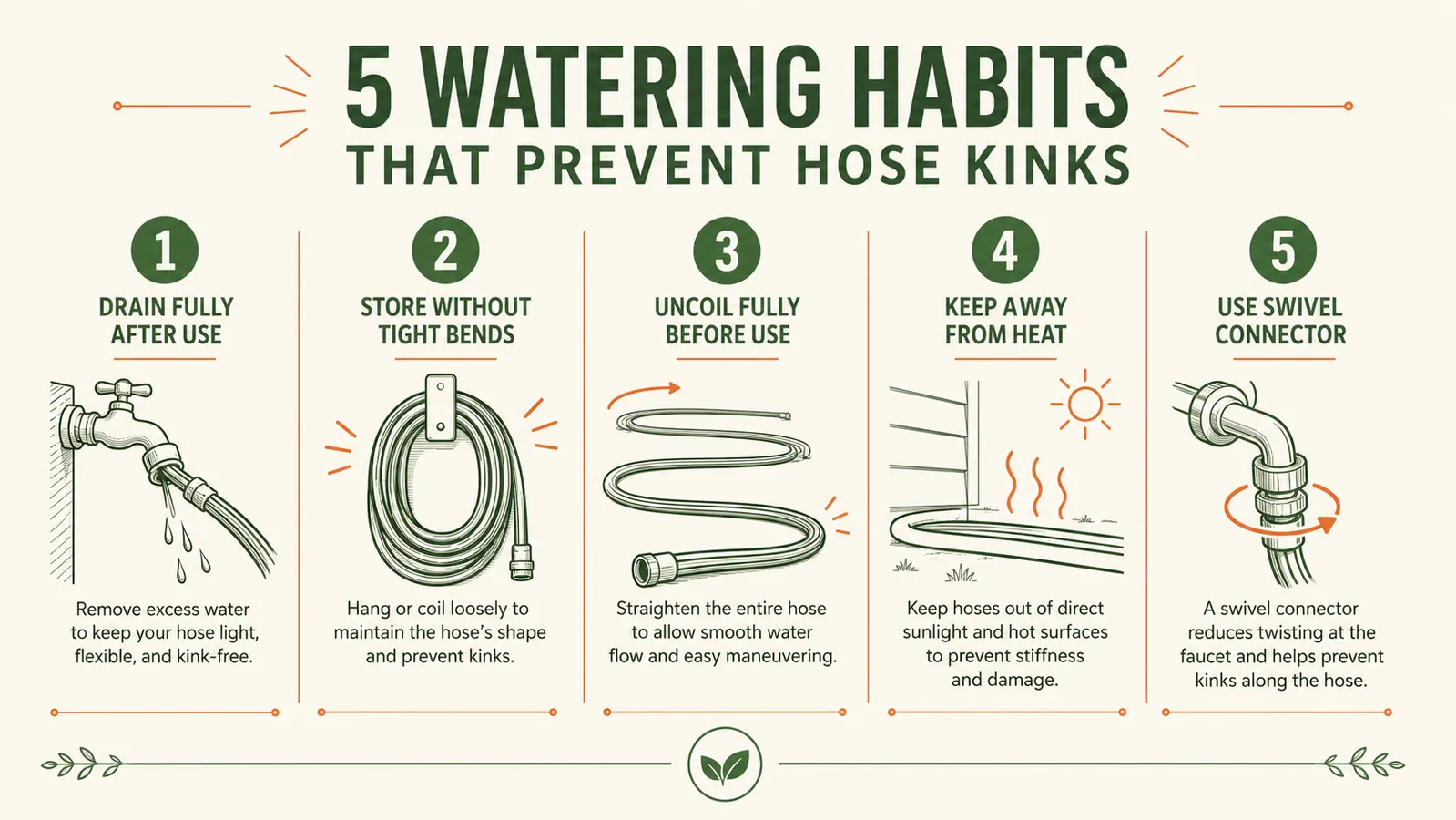
Most watering problems start before you even turn on the spigot. A standard rubber or vinyl hose is heavy, stiff, and almost guaranteed to kink on bends and corners. They work fine if you lay them out in a straight line, but real gardens rarely cooperate. Raised beds, container clusters, winding garden paths, trees in the way: a stiff hose is a kink machine.
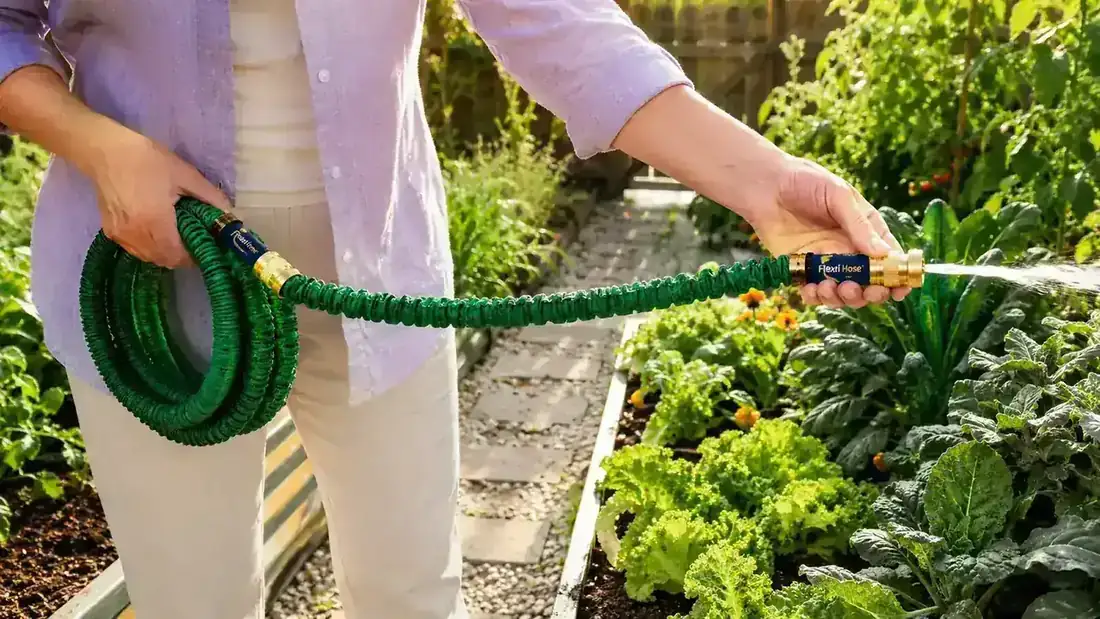
Expandable hoses solve this because the inner tube is designed to flex without folding. The Flexi Hose 50FT is what I switched to after two seasons of fighting a 75-foot rubber behemoth. The expandable design means there's nothing to kink in the traditional sense: water pressure expands the inner tube fully, and a kinked tube is just... a slightly bent spot that the pressure works around. It's not perfect, but it's a fundamentally different experience than coaxing a stiff rubber coil around a corner.
For most home gardens under 40 feet across, a 50FT expandable hose is more than enough reach. If your beds are closer to the spigot, a 25FT version will do. The key point is matching the hose length to your garden: extra hose dragging on the ground is its own tangle risk, so don't buy a 100-footer if you don't need it.
Step 2: Set Up Your Connection Right the First Time
A loose hose connection is one of the most common sources of watering frustration, and it has nothing to do with the hose itself. If you have a slow drip at the spigot, or the fitting spins in your hand, you're losing pressure before the water even reaches the garden. Take five minutes to do this right once and you won't think about it again.
First, make sure there's a rubber washer inside the female fitting on your hose. These dry out and crack over seasons, and a cracked washer equals a leaky connection no matter how tight you crank the fitting. Keep a handful of spare washers on hand: they cost almost nothing at a hardware store and save a lot of griping. Second, hand-tighten the connection firmly, then give it one more quarter turn with pliers. That's all you need. Over-tightening will strip threads over time, especially on plastic fittings.
With an expandable hose like the Flexi Hose, always make sure the hose is fully contracted (small and compact) before connecting. Connecting when the inner tube has any residual expansion in it can create backpressure on the fitting. Store the hose drained and contracted and you'll get years more life out of the connections.
A loose washer costs almost nothing and ruins every watering session. I went two full summers before I figured out why my spigot always dripped. One new washer fixed it.
Step 3: Pick Your Nozzle Setting for the Job
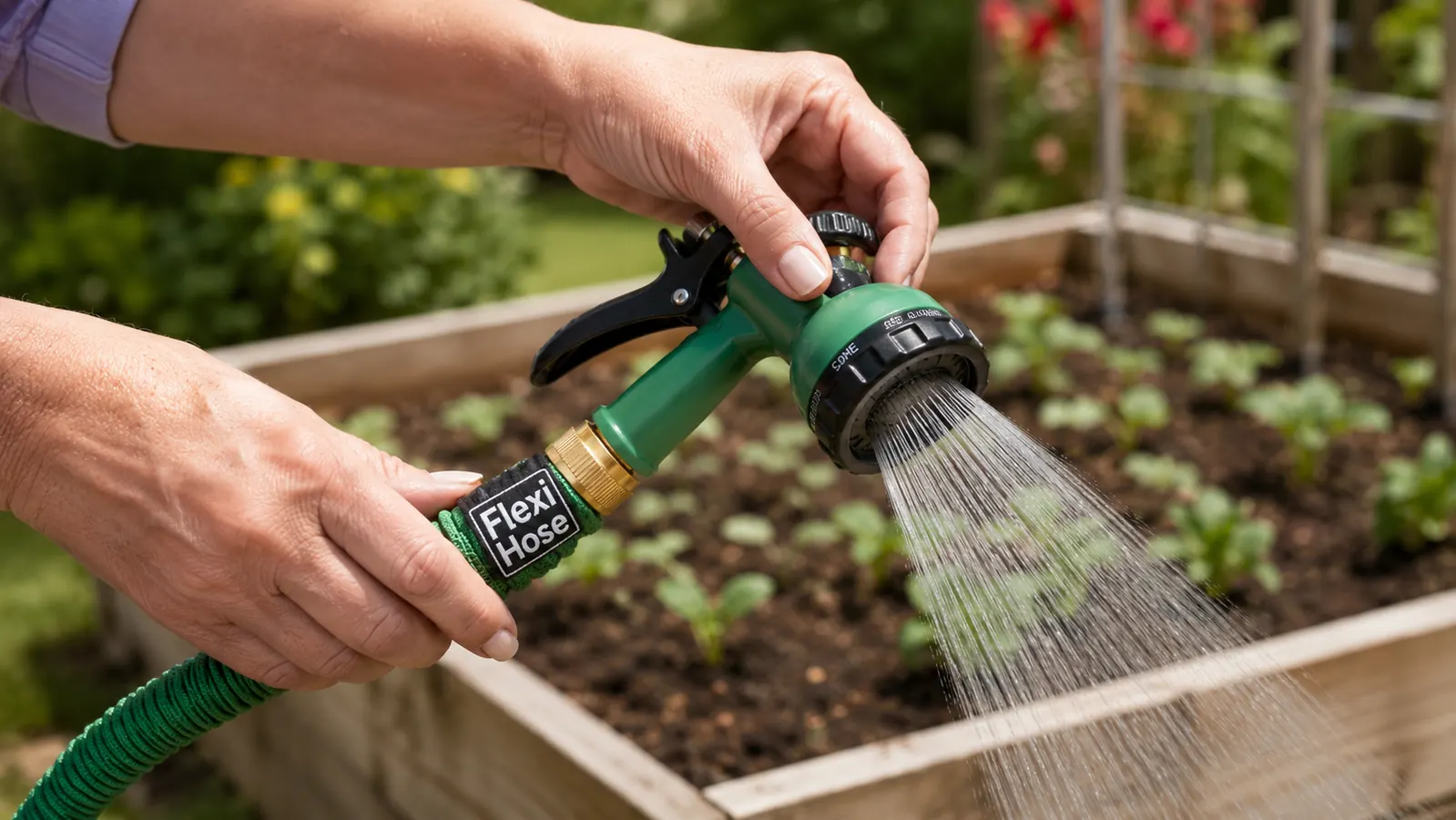
Most garden hose nozzles have six to ten settings, and most people use one of two: jet (to blast something off the driveway) and shower (for plants). But using shower mode on everything is one of the main reasons gardens get waterlogged on top while the root zone stays dry. Water that hits foliage and runs off to the surface never reaches the roots. You want water in the soil, not on the leaves.
For vegetable beds and perennials, the flat or soaker setting on your nozzle is almost always better than shower mode. It sends water in a wide, gentle arc that soaks into the soil rather than bouncing off leaves. For seedlings and newly transplanted starts, the mist setting gives you softer pressure that won't dislodge shallow roots. For containers and hanging baskets, a narrow shower setting works fine because you're directing water at a small defined area.
The jet setting is for cleaning hard surfaces and dislodging aphids from plants when that's an intentional choice. Avoid it near seedlings entirely. One more note: water at the base of the plant when you can, especially for tomatoes, squash, and other plants that get fungal problems when their leaves stay wet. A well-aimed nozzle on a flexible hose makes base watering easy even in tight rows.
Step 4: Water Deeply and Less Often Instead of Lightly Every Day
This is the single technique change that made the biggest difference in my garden, and it had nothing to do with equipment. I used to water every day for about five minutes. The surface looked wet, the plants looked fine, and I felt responsible. Then I dug down into my clay soil after a dry stretch and found bone-dry ground about three inches below the surface. Everything I was putting on top was evaporating before it reached the roots.
Deep, infrequent watering trains plant roots to grow downward toward moisture rather than staying shallow and vulnerable to heat and drought. In clay soil like mine, which drains slowly, I aim to water once every two to three days in summer heat, watering each area for a solid two to three minutes. In sandy or fast-draining soil, you may need to water a bit more often, but still deeply each time. The test is simple: after watering, poke a finger or a small stick four inches into the soil. It should feel moist that deep. If it's dry, water longer.
Early morning is the best time to water, full stop. You lose less to evaporation, the foliage dries quickly during the day, and plants take up moisture during active growth hours. Watering in the evening works in a pinch, but leaves that stay wet overnight invite fungal issues. Midday watering in high summer heat is the worst option: you lose a huge percentage to evaporation before it even reaches the soil.
Step 5: Drain and Store Your Hose Properly After Every Use
The number one way people destroy a garden hose is leaving it coiled and pressurized in the sun. UV breaks down hose material faster than almost anything else, and the constant internal pressure from trapped water stresses the inner tube and the fittings. Most hose failures I've seen (and caused) come from poor storage rather than active use.
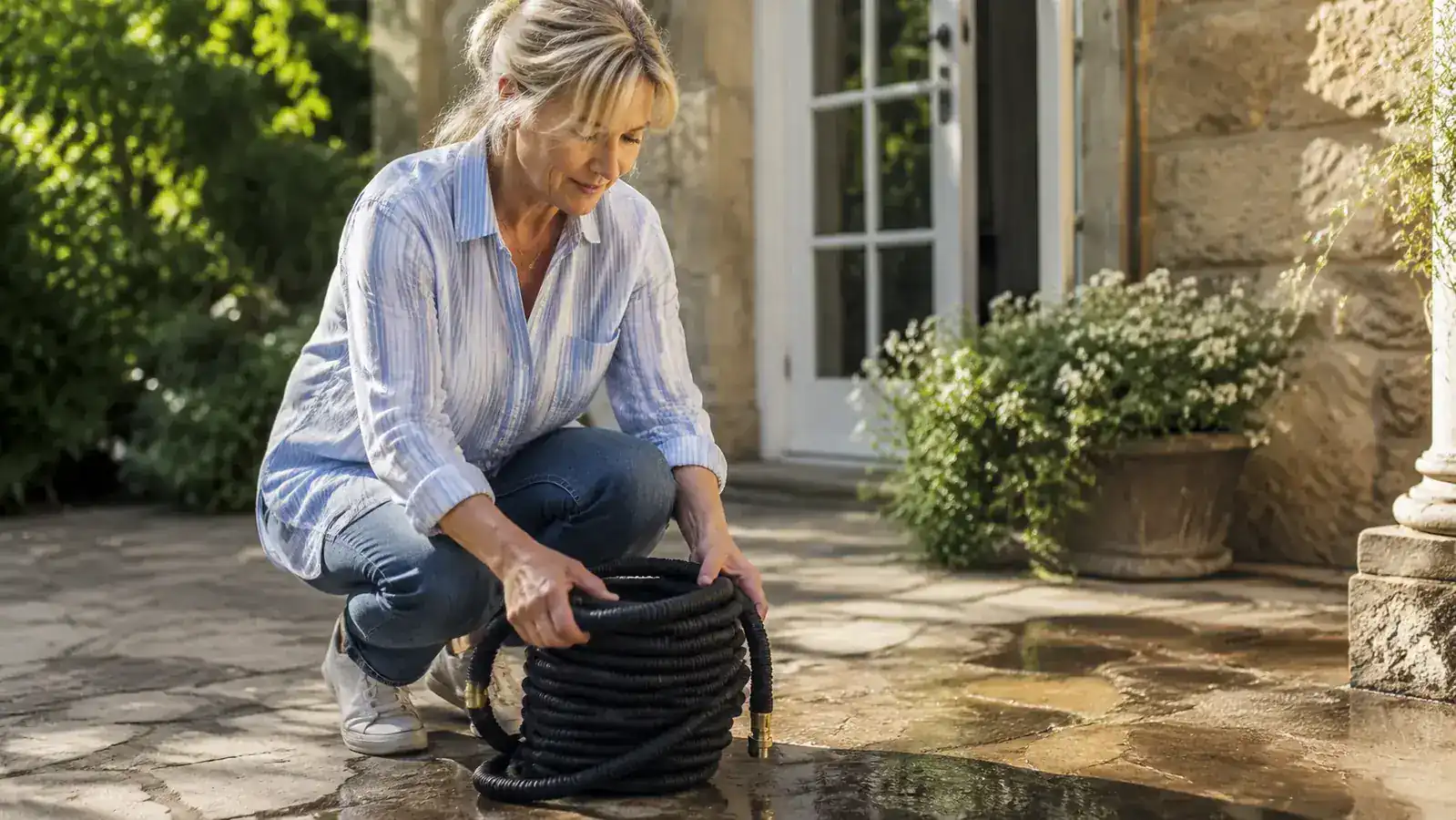
With an expandable hose, this is genuinely easy. Turn off the spigot, then hold the nozzle open for thirty seconds to let all remaining water drain. The hose will contract from 50 feet back down to about 17 feet on its own as the pressure drops. That compact size stores in a bucket, a hook on the fence, or a small hose pot by the door. You do not need a large wall-mounted reel. The Flexi Hose practically stores itself, which is honestly one of its best features for small-space gardening.
In winter, bring any expandable hose indoors. The latex inner tubes do not tolerate freezing, and a hard freeze will crack the inner bladder on even a well-made expandable hose. Standard rubber hoses are more tolerant of cold, but still do better stored in a garage or shed. Drain them fully before the first freeze regardless.
What Else Helps
Beyond hose choice and technique, a few additional habits will make your watering routine noticeably smoother. Mulching your beds is one of the best returns on a small investment: two to three inches of wood chip or straw mulch cuts your watering frequency almost in half by holding moisture in the soil and keeping the surface from baking. In clay soil, mulch also prevents the hard crust that forms after watering and stops water from soaking in on the next pass.
A simple hose guide stake at the corner of each garden bed also prevents a lot of grief. These are the small metal or plastic pins you push into the ground at bed corners, and they lift the hose off low plantings and keep it from dragging across your perennials when you drag it around the yard. A pack of four or six costs almost nothing and spares you from accidentally pulling up your pepper seedlings every time you move the hose.
If you're watering containers or a small patio garden, consider a simple Y-connector at the spigot so you can run one hose for the beds and keep a second shorter hose for the containers without having to disconnect anything. This feels like a tiny luxury until you've disconnected and reconnected a hose forty times in one weekend and you wonder why you never did it sooner.
For more on how the Flexi Hose compares to a standard rubber hose over a full growing season, my full two-season review covers pressure performance, fitting wear, and what held up better than expected. And if you're weighing whether an expandable hose is worth it at all, the breakdown of ten real advantages of expandable hoses over standard ones is worth reading before you decide.
Ready to stop doing the kink shuffle every time you water? The Flexi Hose 50FT handles the trip from spigot to bed without fighting you.
It contracts to about 17 feet for storage, expands to a full 50FT under pressure, and has brass fittings that hold up season after season. More than 26,000 buyers have rated it 4.1 stars, and the most common note is that they wish they'd switched sooner.
Amazon Check Today's Price on Amazon →